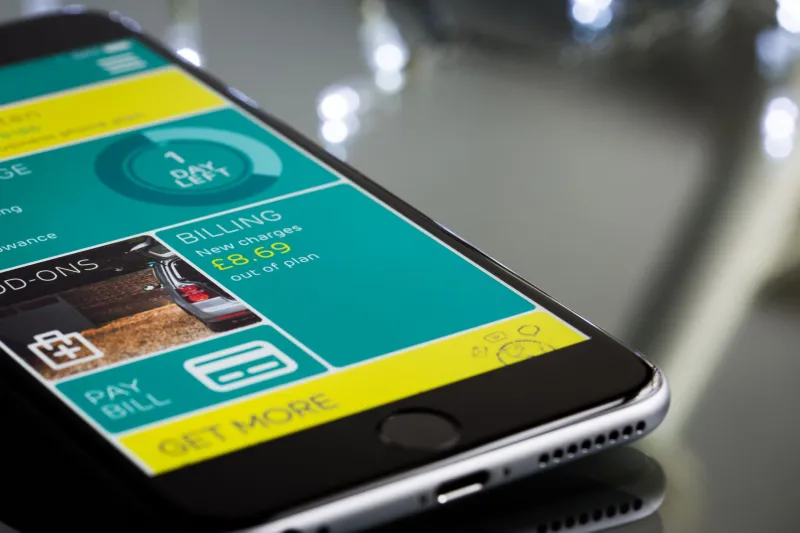
Declined, Not Denied: Using Your Bank's Gambling Block as a Budget Line in 2026

There is a toggle buried in your banking app that most UK players have never touched. It usually sits under card controls or security settings, labelled something sensible and slightly stern. It is switched off. It stays switched off, because switching it on feels like an admission, and nobody wants to make an admission on a Tuesday lunchtime.
That is the wrong way to read it. A gambling block is not a confession and it is not a fire alarm. Used properly, it is closer to a budget line — a quiet, automated 'not today' that does the tedious self-control work for you, so you can spend your attention on the parts of a casino session that are actually enjoyable.
What the block is, underneath the marketing
Your bank's gambling block works at card level. It tells the bank to decline card transactions tagged with the merchant category code for gambling — the same code that covers casino deposits, sportsbook bets and most lottery purchases made by card. When it is on, a deposit attempt simply bounces at the checkout.
It is worth being clear about what it is not. It is not a self-exclusion, and it is not GAMSTOP. It does not tell any casino who you are, it does not close your accounts, and it does not block every route into a gambling site. Deposits made by bank transfer, through some e-wallets, or via Pay by Bank style methods may travel outside the card rails entirely. That is a genuine gap, and any honest guide should say so rather than pretend the toggle is a force field.
What it does do very well is add a layer of deliberate delay to the most common, most impulsive action in online gambling: the card deposit at eleven o'clock at night.
Who offers one, and how stubborn it is
As of 2026, the list is long. Barclays was first to the party back in 2019 and the rest of the high street followed across 2019 and 2020 — HSBC and first direct, Lloyds, Halifax and Bank of Scotland, NatWest and Royal Bank of Scotland, Santander, Nationwide, TSB, Co-operative Bank, Metro Bank, Virgin Money. The app-based challengers are in too: Monzo has blocked gambling merchants for years and Starling offers a toggle alongside its own controls.
The interesting part is not who has one. It is how much arguing the bank makes you do to switch it back off. This varies enormously. Some providers remove the block instantly. Others impose a cooling-off period of 24 hours, 48 hours, or in some cases require you to open a chat, explain yourself to a human, and then wait. TSB's approach has historically been among the strictest, with gambling transactions blocked on debit cards rather than offered as a soft option.
That variation matters, because the delay is the feature. A block you can remove in four seconds is a reminder. A block that takes two days to remove is a budgeting tool.
Check your own app before you plan anything — look under card controls, security, or payment settings, or ask in the in-app chat what the removal delay is. Write the number down. It is the single most useful fact in this article.
So what happens when a deposit is declined?
Short answer: not much, and that is the point.
The transaction fails at the checkout. The funds do not leave your account. You may see a declined or reversed authorisation in your banking app, and a few banks will ping you a notification. The casino sees a failed payment, and depending on the operator you might get an email nudging you to try another method. Ignore it. Nothing has gone wrong, nothing has been reported to anyone, and no flag has appeared next to your name.
One practical note: don't sit there retrying with three different cards. Repeated failed deposits can trip a casino's own payment security checks and, more to the point, retrying is exactly the behaviour the block exists to interrupt. Take the decline as the answer and go and make a cup of tea.
And your cashouts?
They still arrive. Withdrawals from a casino are credits into your account, not debits out of it, and a card-level gambling block is designed to stop you paying in, not to stop money coming back. Players routinely report withdrawals landing normally while the block is active.
There is one wrinkle worth knowing. If a casino returns your withdrawal to the same card you deposited with, and that card is blocked for gambling merchants, the credit can occasionally take a little longer to post while the bank works out what it is looking at. If a cashout feels stuck, ring the bank rather than assuming the worst. Nine times out of ten it is a routine timing issue, not a problem with your money.
The three-step routine
Here is the version that actually fits around real life rather than asking you to give anything up.
Step one: leave the block on by default. Not as a punishment, and not as a sign that things have gone wrong. Think of it as the resting state, the way your front door is locked when you are not actively using it. The vast majority of the time you are not depositing, so the vast majority of the time the block should be doing its job.
Step two: use the removal delay as a diary, not an obstacle. This is the clever bit. If your bank takes 24 hours to lift the block, then requesting removal on Friday morning gives you a Saturday evening window — and a full day in between to change your mind, check your balance, or realise you would rather spend the money on something else. You are not fighting the delay. You are scheduling it. Decide the session, request the unlock, let the clock run, and if you still fancy it when the block lifts, you have made a decision rather than a reflex.
Step three: re-arm and review. Switch the block straight back on the morning after. Then, once a week, spend five minutes looking at what you actually deposited versus what you had planned. No spreadsheet heroics required — a note on your phone is plenty. The point is simply to notice whether the block is doing the work or whether you are forever working around it. If it is the latter, that is worth a conversation with someone, and GamCare or the National Gambling Helpline on 0808 8020 133 are there for exactly that.
Where the block stops helping
Be honest with yourself about the gaps. If your usual deposit route is an e-wallet or a bank transfer, a card block may not touch it. If you hold accounts at three banks, you have three toggles — switch on all of them. And if the block is the only thing standing between you and a session, that is a signal to lean on something stronger: GAMSTOP for a UK-wide self-exclusion, or a conversation with a support service.
The takeaway
A gambling block is not the seatbelt you hope never to need. It is a line in the budget, drawn in advance, by a version of you who was thinking clearly. Switch it on while nothing is at stake, learn how long your bank makes you wait, and then let that wait do the work. It is about the least glamorous responsible-gambling tool going — and quite possibly the one you will actually use.